
Serving Princeton & Surrounding Communities
Microneedling PRP/PRF
in Princeton, NJ
Doctor-administered collagen induction therapy combined with platelet-rich fibrin (PRF) — the evidence-based Generation 3 upgrade beyond traditional PRP — drawn from your own blood. Performed personally by NYU-trained Dr. Maxim Godko, DDS at the Princeton area's only Care Esthetics certified medical spa. Just 15 minutes from downtown Princeton via US-206, serving Princeton Borough, Princeton Junction, Montgomery Township, Rocky Hill, Kingston, and the entire Princeton corridor.
5.0 Stars — A+ BBB Rated
DermaPen™
Global Pioneer
15 Min from Princeton
For Princeton Patients
Schedule Your Consultation
Princeton's only Care Esthetics certified microneedling practice.
Princeton has no shortage of microneedling providers — RF pens, SkinPen devices, and Rejuvapen treatments at practices throughout the Route 1 corridor and Nassau Street area. Platelet-concentrate treatments are widely available too — PRP injections at multiple plastic surgery offices, PRFM (Selphyl) at select aesthetic providers, and standalone PRF at a handful of medical spas. What Princeton doesn't have is a Care Esthetics certified practice where microneedling is performed personally by a physician using the DermaPen™ (the global pioneer of the technology) paired with Gen 3 PRF from your own blood as one combined regenerative protocol. That is Deluxe Esthetics, 15 minutes south of downtown Princeton via US-206 in Lawrenceville, NJ. Dr. Maxim Godko, DDS performs every microneedling session himself — no delegation to aestheticians, nurses, or PAs.

Natural Skin Regeneration
WATCH THE PROCESS
See Microneedling with PRF in Action
Watch this clinical demonstration from CARE Esthetics — the global authority on regenerative facial esthetics — to see exactly how your own platelet-rich fibrin is processed and applied during treatment. This educational video walks through the entire process, from the blood draw and centrifugation to the DermaPen application that delivers growth factors deep into the skin.
Video courtesy of CARE Esthetics — the global leader in regenerative facial esthetic protocols
The Science
How Your Skin Transforms
Microneedling is officially called collagen induction therapy. It triggers a four-phase biological cascade that your body does naturally — just more efficiently, and in the right places.
01
Inflammatory
Days 1–3. Your body floods the micro-channels with growth factors — PDGF, TGF-β, VEGF — the natural healing cascade activates.
02
Proliferative
Days 3–14. Fibroblasts multiply and begin laying down new collagen and elastin. Fresh epidermis forms. Visible glow emerges.
03
Remodeling
Weeks 2 through 12+. Collagen matures and reorganizes. Density peaks at week 4 and continues improving through month 6.
04
PRF Boost
Your own platelet-rich fibrin slow-releases growth factors into the micro-channels — amplifying every phase beyond what microneedling alone achieves.
Your skin already knows how to heal itself. Microneedling with PRF simply gives it the signal — and the raw materials from your own blood — to do it better.
— The Regenerative Philosophy What We Treat
Every Skin Concern.
Every Skin Concern.
One Regenerative Protocol.
Microneedling with PRF addresses concerns across five categories. Click any condition to see it in your treatment plan during consultation.
Aging Concerns
Category 01
Aging & Structural
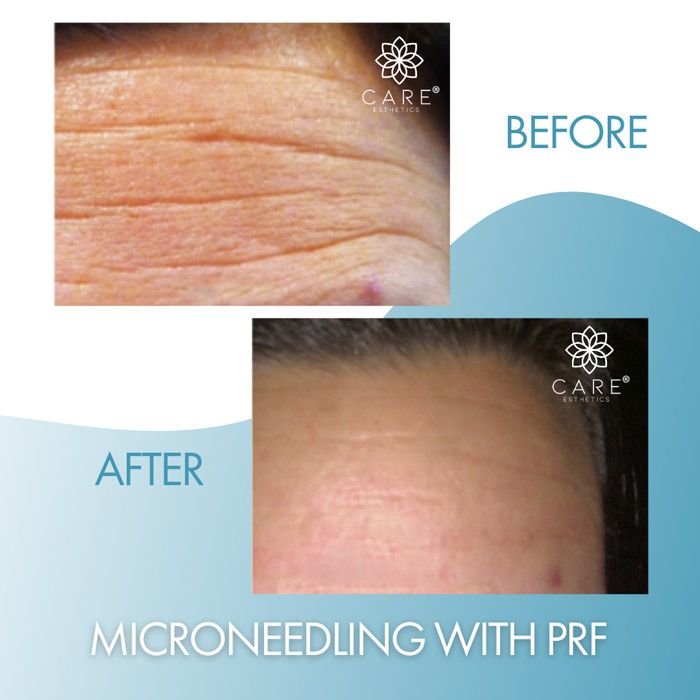
After age 25, collagen production declines roughly 1% per year. Microneedling with PRF directly reverses this by triggering new collagen and elastin production in the dermis — the structural proteins that give skin its youthful firmness.
Fine Lines & Wrinkles
Sagging & Crepey Skin
Collagen Loss
Thinning Skin
Scars & Texture
Category 02
Scars & Stretch Marks
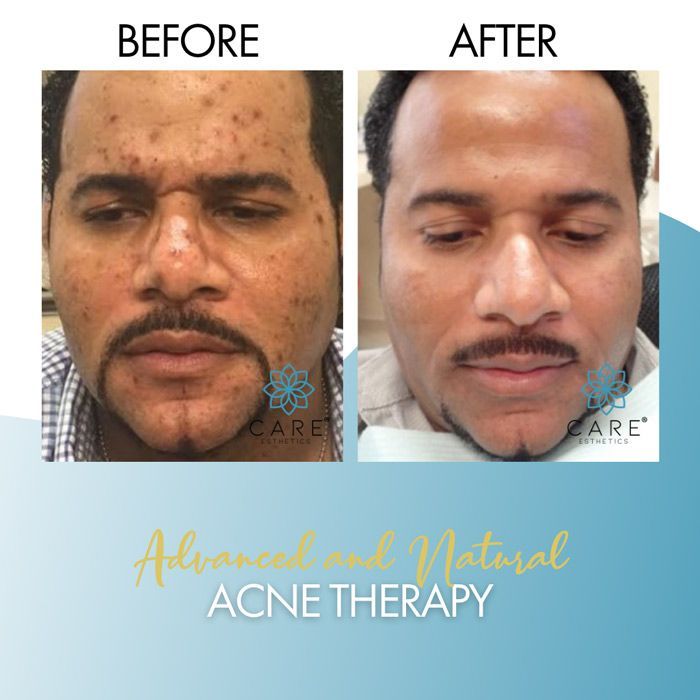
Microneedling physically breaks up fibrous scar tissue while triggering fresh collagen deposition to fill depressions. Two of the three FDA-cleared indications are scar-related — acne scars and abdominal scars.
Acne Scars
Surgical Scars
Burn & Injury Scars
Stretch Marks
Pigmentation
Category 03
Pigmentation & Sun Damage
Unlike lasers, microneedling uses no heat — making it uniquely safe for melasma and darker skin tones where thermal energy can worsen pigmentation. It physically disrupts pigment deposits and accelerates turnover.
Sun Damage & Sun Spots
Melasma
Hyperpigmentation
Post-Inflammatory PIH
Texture & Glow
Category 04
Texture, Pores & Radiance
The famous "microneedling glow" becomes visible within days as cellular turnover accelerates. Collagen production around pore openings tightens and reduces their appearance, while overall texture becomes demonstrably smoother.
Enlarged Pores
Uneven Texture
Dull Skin
Rosacea Redness
Hair Restoration
Category 05
Hair Restoration
Scalp microneedling activates dormant follicles and creates micro-channels that deliver PRF growth factors directly where they are needed. For early-stage thinning, this protocol can meaningfully restore density.
Thinning Hair
Alopecia Areata
Androgenetic Alopecia
Eyebrow Restoration
The Princeton Choice
PRF vs. RF Microneedling
Princeton's microneedling market is dominated by RF specialists. Here's why patients seeking inclusive, regenerative care choose PRF instead.
RF Microneedling
Offered at most Princeton-area medspas and plastic surgery practices (Genius RF, Morpheus8, Vivace)
- Delivers radiofrequency heat into the dermis
- Stimulates collagen via controlled thermal injury
- Higher risk for Fitzpatrick IV–VI (PIH, melasma worsening)
- 5–7 day recovery with persistent redness
- Often delegated to aestheticians, PAs, or nurse injectors
- Best for skin tightening on fair-to-medium skin tones
vs
PRF Microneedling OUR PROTOCOL
Available exclusively at Deluxe Esthetics — Mercer County's only Care Esthetics certified practice
- Zero thermal energy — no heat applied to skin
- Stimulates collagen via your own platelet-derived growth factors
- Safe for all Fitzpatrick skin types I–VI
- 24–48 hour recovery, no persistent redness
- Personally performed by NYU-trained Dr. Maxim Godko, DDS
- Best for all skin types, melasma, acne scars, hair restoration
This isn't "RF is bad, PRF is good." Both are FDA-cleared collagen induction technologies, and respected plastic surgery practices in the Princeton area use RF protocols safely every day. The right choice depends on your skin type, your aesthetic goals, and your tolerance for thermal treatment.
For Princeton patients with darker skin tones, a history of melasma or hyperpigmentation, or anyone who prefers a heat-free regenerative approach with a 24-hour recovery — PRF microneedling is the safer, more inclusive option. And within all of Mercer County, it's available only at Deluxe Esthetics.
The Platelet Concentrate Evolution
Not all "platelet treatments" in Princeton are the same.
Princeton-area aesthetic medicine has evolved through three generations of platelet concentrates. Most local providers stopped at Generation 2. We built our protocol around the Generation 3 combined approach — and it's why our results are different.
Gen 1
PRP
Platelet-Rich Plasma
- Uses chemical anticoagulant additives during extraction
- Active in tissue approximately 1 day
- First-generation technology, oldest method in clinical use
Offered by: many Princeton plastic surgery practices
Gen 2
PRFM
Platelet-Rich Fibrin Matrix (Selphyl)
- Better than PRP, but the Selphyl kit uses a thrombin activator
- Active in tissue approximately 1 week
- Marketed as "natural," but not 100% additive-free
Offered by: select Princeton aesthetic providers
Gen 3
PRF
Platelet-Rich Fibrin
- Zero additives, zero activators — 100% your own blood
- Growth factors released gradually over weeks, not days
- Latest-generation regenerative science
Offered by: limited Princeton medical spas, typically as a standalone injectable
Our Protocol
Microneedling with PRF
Combined Regenerative Treatment
- Gen 3 PRF + DermaPen™ micro-channeling as one combined treatment
- Care Esthetics certified protocol
- Personally performed by NYU-trained Dr. Maxim Godko, DDS
- Safe for all Fitzpatrick skin types I–VI
The only Mercer County practice offering this combined Care Esthetics certified protocol
When a Princeton patient compares "platelet treatments," they're often comparing technologies that are decades apart in clinical development. Generation matters. So does whether the protocol delivers PRF as a standalone injection or as a combined microneedling treatment that drives growth factors deeper into the dermal layer.
Our Unique Advantage
PRF vs. Traditional PRP
Most area practices use PRP. We use something better.
Traditional PRP
- Liquid plasma fraction only
- Requires chemical anticoagulants
- Rapid release, dissipates in hours
- Shorter regenerative window
- Widely offered across medspas
vs
PRF OUR PROTOCOL
- Fibrin matrix scaffolds your platelets
- 100% natural — zero additives
- Slow-release over days to weeks
- Sustained regenerative activity
- Care Esthetics providers only
Because PRF is your own blood processed without additives, it carries zero risk of allergic reaction or rejection — and the fibrin matrix continues releasing growth factors into the micro-channels long after the treatment ends.
Your Visit
The Treatment Journey
A typical session lasts 60-90 minutes from arrival to departure.
1
Consultation & Skin Analysis
Dr. Godko evaluates your skin, identifies your primary concerns, reviews your medical history, and designs a personalized treatment plan.
2
PRF Preparation
A small blood sample is drawn and processed in a centrifuge to isolate the platelet-rich fibrin matrix — approximately 15 minutes while your skin numbs.
3
Topical Numbing
A medical-grade topical anesthetic is applied for 20-30 minutes. The microneedling itself feels like mild vibration rather than pain.
4
DermaPen™ Microneedling
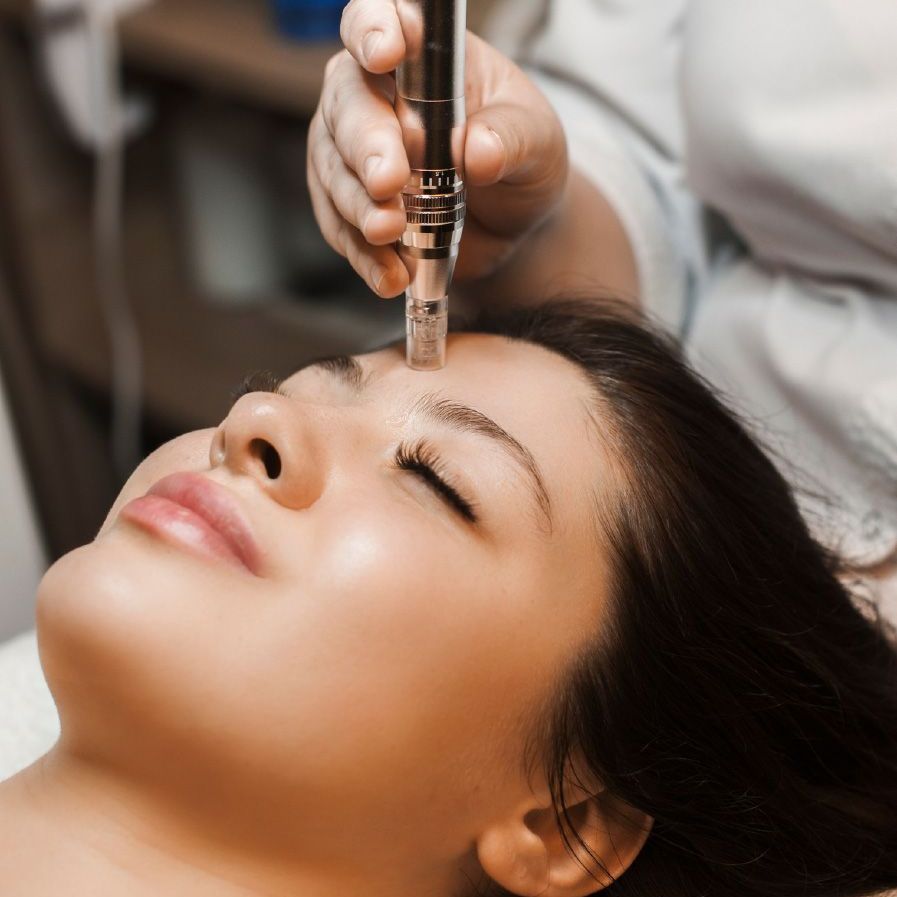
Dr. Godko uses a sterile 12-needle tip to create thousands of precisely controlled micro-channels. Needle depth is calibrated to your specific targets.
5
PRF Application
Your PRF is applied topically into the open micro-channels where its fibrin matrix begins delivering sustained-release growth factors.
6
Post-Treatment & Home
Hyaluronic acid recovery serum, protective moisturizer, and written aftercare instructions. Most patients return to work the next day.
Real Results
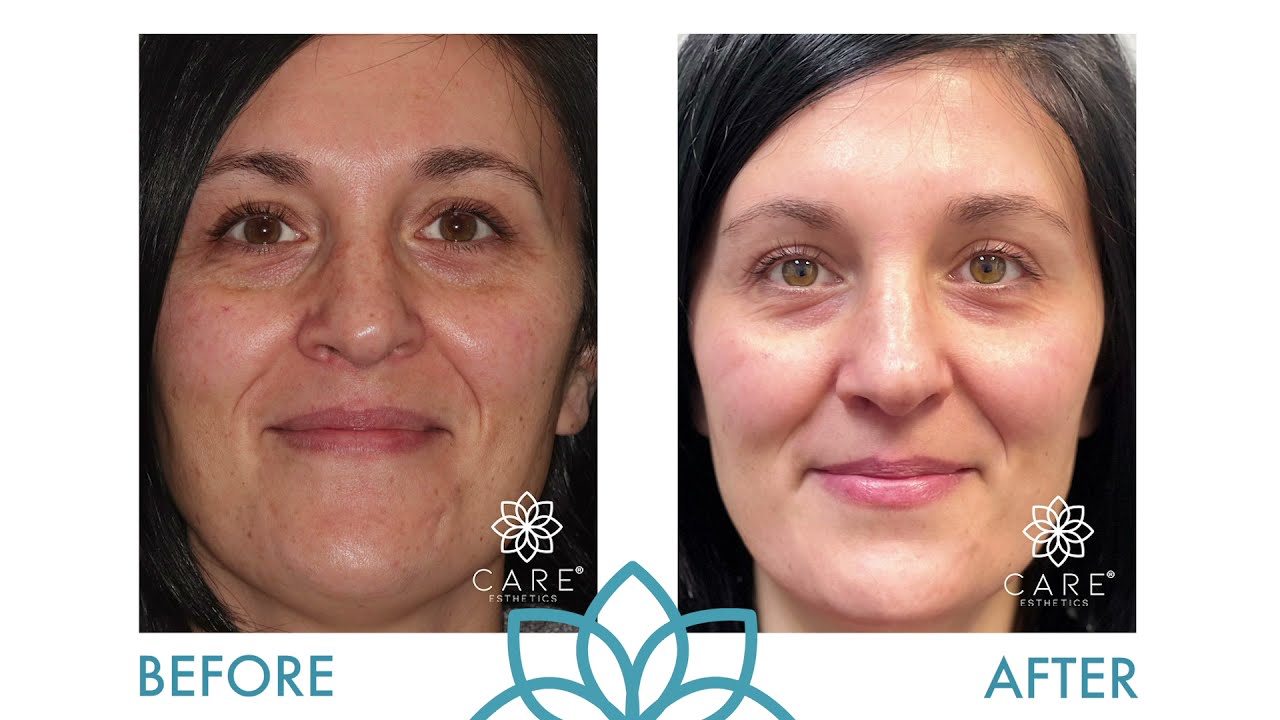
Before & After
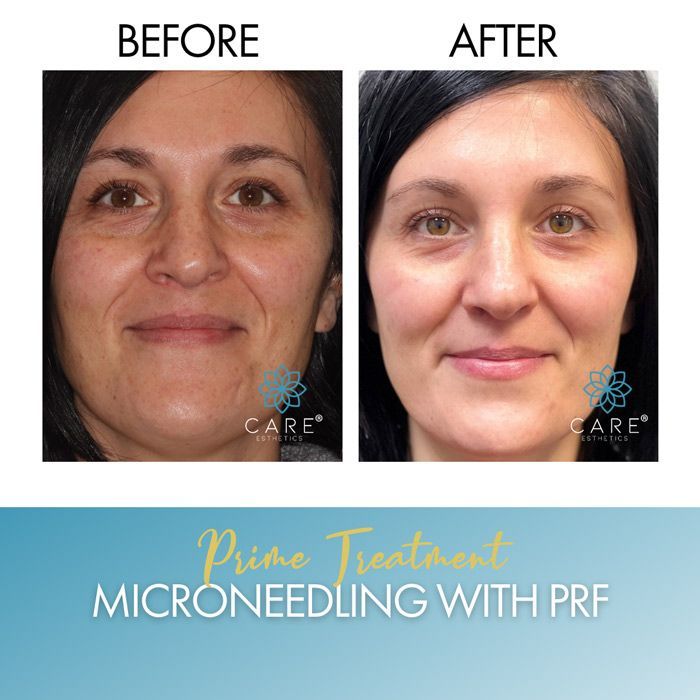
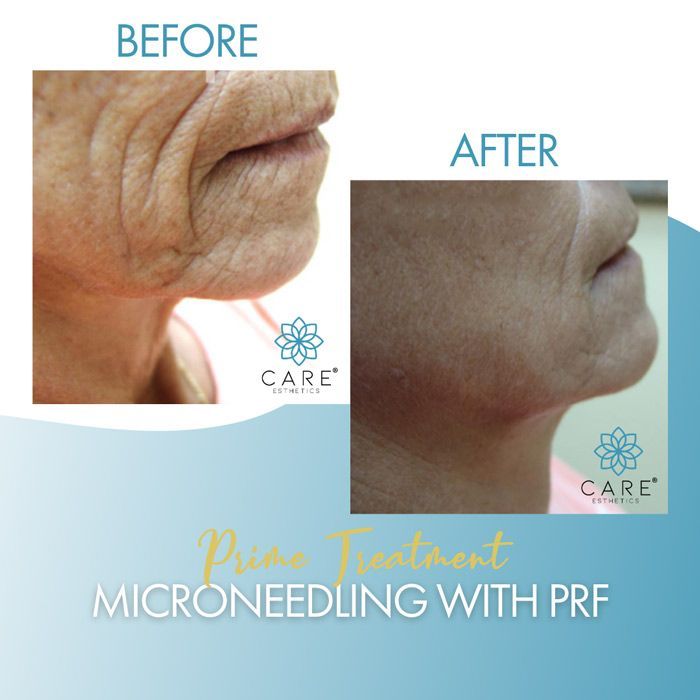
Actual Deluxe Esthetics patients after their complete microneedling with PRF treatment series.
Texture & Tone
Acne Scar Revision
Complete Series Results
Fine Lines & Wrinkles
Individual results vary. Photos represent typical outcomes after a complete treatment series.
Your Recovery
Day by Day, Week by Week
Microneedling has minimal downtime. Here's exactly what your skin does during recovery — and when your results emerge.
Days 1–2
Mild Sunburn Look
Pink, warm, slightly tight. Back to work the next day.
Days 3–5
Gentle Peeling
Light flaking as dead skin sheds. Do not pick.
Days 6–14
Early Glow
Skin feels softer, brighter, smoother. PRF active.
Week 4
Collagen Peaks
Clinical studies confirm collagen density peak at 4 weeks.
Months 2–6
Full Transformation
Collagen matures, scars soften, pigment fades, structure improves.
Protocol
Pre-Treatment & Aftercare
Research shows properly prepared skin has up to 40% less redness and heals 30% faster. Follow this protocol for optimal results.
Before Your Appointment
1 Week Before
- Stop retinoids (Retin-A, tretinoin, retinol)
- Stop AHA/BHA acids (glycolic, salicylic)
- Stop hydroquinone and benzoyl peroxide
- Avoid waxing, laser hair removal, depilatories
- Avoid sun tanning and burns
3 Days Before
- Stop NSAIDs (ibuprofen, Motrin, aspirin)
- Stop fish oil, Vitamin E, Ginkgo Biloba
- If prone to cold sores, start prescribed antiviral
Day Of
- Arrive with clean skin, no makeup
- Do not shave the treatment area that day
- Stay hydrated — drink plenty of water
After Your Treatment
First 24 Hours
- Do not wash your face — let PRF absorb
- No makeup, no skincare actives
- No exercise, saunas, or heavy sweating
- Do not ice the treatment area
- Sleep with head slightly elevated
Days 2–7
- Gentle cleanser with lukewarm water only
- Hyaluronic acid serum + simple moisturizer
- SPF 30+ daily (mineral preferred)
- Do not pick at peeling skin
- Mineral makeup OK after 24-48 hours
Weeks 2–4
- Resume normal skincare once fully healed
- Reintroduce retinoids slowly (day 7-10 min)
- Continue daily SPF religiously
- Schedule next session at week 4-6
Investment in Your Results
How Many Sessions?
Results are cumulative. Each session builds on the prior collagen and elastin production. Here is what most patients need by concern.
Skin Rejuvenation
3 sessions
4–6 weeks apart
Fine Lines & Wrinkles
3–4 sessions
4–6 weeks apart
Acne Scars
4–6 sessions
Deeper needle depth
Stretch Marks
4–6 sessions
6 weeks apart
Sun Damage
3–5 sessions
Plus topical brighteners
Hair Restoration
4–6 sessions
4 weeks apart
After your initial series, a single maintenance session every 6 to 12 months preserves — and compounds — your results year over year.
Credentials
NYU-Trained DDS
Care Esthetics Certified
The Difference
Why Doctor-Administered Matters
Microneedling is offered at nearly every medspa in New Jersey — but it is overwhelmingly delegated to aestheticians, nurses, or physician assistants. At Deluxe Esthetics, every treatment is personally performed by Dr. Maxim Godko, DDS.
Needle depth calibration, real-time pressure adjustment, identification of vascular and nerve structures, anatomical judgment — these require training that separates doctor-administered care from technician-performed microneedling.
NYU College of Dentistry
Care Esthetics Certified
5.0 Google Rating
A+ BBB Accredited
Meet Dr. Godko
Questions Answered
What Patients Ask
The most detailed answers to the questions we hear most often.
Why do Princeton patients drive to Lawrenceville for microneedling?
Because the Princeton area doesn't currently have a Care Esthetics certified microneedling practice. While several established medspas and plastic surgery offices along the Route 1 and Nassau Street corridors offer RF microneedling, SkinPen, and Rejuvapen treatments, none combine doctor-performed technique, the DermaPen™ (the global pioneer of microneedling technology), and genuine PRF protocols based on Dr. Richard Miron's evidence-based methodology. At Deluxe Esthetics, all three come standard. Dr. Maxim Godko, DDS performs every session personally — not delegated to aestheticians, nurses, or physician assistants. The 15-minute drive south on US-206 from downtown Princeton is why patients from Princeton Borough, the Western Section, Princeton University, and Princeton Junction choose our practice over those within Princeton itself.
How does PRF microneedling compare to the RF microneedling popular in Princeton?
RF microneedling (radiofrequency microneedling) and PRF microneedling address skin rejuvenation through fundamentally different mechanisms. RF microneedling uses microneedles to deliver radiofrequency heat into the dermis, creating thermal injury that stimulates collagen through heat-induced wound healing — effective for skin tightening but with more downtime and thermal risk, particularly for darker skin tones. PRF microneedling uses the DermaPen to create precise microchannels, then delivers platelet-rich fibrin from your own blood into those channels, stimulating collagen through natural growth factor signaling without any thermal injury. PRF has a significantly better safety profile across all skin types (Fitzpatrick I–VI), shorter downtime (24–48 hours versus 5–7 days for RF), and delivers measurable growth factors (PDGF, TGF-β, VEGF, IGF) that RF cannot. For Princeton patients seeking natural regeneration without heat-based treatment or synthetic additives, PRF microneedling is the more evidence-based choice.
What skin conditions can microneedling with PRF treat?
Microneedling with PRF addresses over 15 distinct skin concerns across five categories. Aging and structural:
fine lines, wrinkles, sagging skin, loss of collagen, thinning skin. Scars:
acne scars, surgical scars, burn scars, injury scars, stretch marks. Pigmentation:
sun damage, sun spots, melasma, hyperpigmentation, post-inflammatory hyperpigmentation. Texture:
enlarged pores, uneven skin texture, dull skin, rosacea-associated redness. Hair:
thinning hair, androgenetic alopecia, eyebrow restoration. Dr. Godko evaluates your specific concerns and designs a treatment plan targeting your primary goals.
How does microneedling with PRF actually work?
Microneedling is called collagen induction therapy because it uses a sterile 12-needle tip to create thousands of precisely controlled micro-channels in your skin. Your body interprets these micro-channels as tiny injuries and responds with a wound-healing cascade — flooding the area with growth factors, fibroblasts, collagen, and elastin. PRF (platelet-rich fibrin) derived from your own blood is applied during and immediately after the treatment. The fibrin matrix acts as a scaffold that slowly releases your body's own growth factors (PDGF, TGF-β, VEGF, IGF) into the open micro-channels over the following days, amplifying the regenerative response beyond what microneedling alone can achieve.
Is microneedling painful?
Most patients describe microneedling as a mild to moderate sensation — similar to a vibrating, scratchy feeling — rather than pain. A topical numbing cream is applied for 20–30 minutes before treatment begins, which makes the procedure comfortable. Some patients feel slight warmth or mild discomfort near bony areas like the forehead or cheekbones. Deeper treatment depths (used for acne scars and stretch marks) may be more sensitive. Most patients return to normal activities immediately after their session.
How many sessions will I need?
Session counts depend on your primary concern. For general skin rejuvenation and glow, 3 sessions spaced 4–6 weeks apart is typical. For fine lines and wrinkles, 3–4 sessions. For acne scars and stretch marks, 4–6 sessions at deeper needle settings. For pigmentation, 3–5 sessions. For hair restoration, 4–6 sessions spaced 4 weeks apart. After your initial series, maintenance treatments every 6–12 months preserve and build on your results. Results are cumulative — each session builds on the prior collagen and elastin production.
When will I see results, and how long do they last?
You will notice a "microneedling glow" within 3–7 days as the first layer of skin turnover completes. Clinical studies show collagen density peaks around week 4 post-treatment and continues remodeling through month 6. Results from a single session last approximately six months. With a complete treatment series (3–6 sessions), results last significantly longer and build cumulatively. Aging, sun exposure, and genetics affect durability — which is why annual maintenance sessions preserve your gains long-term.
What's the difference between PRP, PRFM, and PRF?
All three come from your own blood, but they represent three generations of platelet concentrate technology with significant differences. PRP (Platelet-Rich Plasma)
is the first generation — it requires chemical anticoagulant additives during processing, and remains active in tissue for approximately 1 day. PRFM (Platelet-Rich Fibrin Matrix), commonly known as the Selphyl system, is the second generation — better than PRP, but the Selphyl kit uses a thrombin activator, meaning it is not 100% additive-free as sometimes marketed. PRF (Platelet-Rich Fibrin)
is the third generation — zero additives, zero activators, processed without any chemical intervention. PRF includes a natural fibrin matrix that gradually releases growth factors over weeks rather than days, for sustained regenerative effect. PRF is available only through Care Esthetics certified providers and is the protocol used at Deluxe Esthetics.
Is microneedling with PRF better than getting a PRF injection alone?
For most patients seeking facial rejuvenation, the combined microneedling-with-PRF protocol delivers better results than standalone PRF injections. The reason is mechanical: microneedling creates thousands of precise micro-channels in the skin that allow PRF to be absorbed directly into the dermal layer, where collagen production occurs. A PRF injection alone is deposited in specific points and must rely on natural tissue diffusion. The combined approach distributes PRF more evenly across the treatment area, amplifies absorption, and stacks the collagen-induction effect of microneedling on top of the regenerative effect of PRF. It is also the protocol where Care Esthetics certification matters most — Care Esthetics is built around the combined treatment, not standalone injection. Standalone PRF still has appropriate uses, particularly for under-eye hollows and isolated volume concerns, and Dr. Godko will recommend the right approach for your specific goals.
Why does Deluxe Esthetics use PRF instead of PRFM (Selphyl)?
PRFM (Selphyl) was a meaningful improvement over PRP when it launched, but it remains a second-generation platelet concentrate. The Selphyl extraction kit uses a thrombin activator to create the fibrin matrix, which means PRFM is not 100% additive-free even though it is often marketed that way. Generation 3 PRF, by contrast, uses no chemical additives and no activators — the fibrin matrix forms naturally through low-speed centrifugation alone. Gen 3 PRF also releases growth factors gradually over weeks, compared to PRFM's approximately one-week activity window. For patients who choose Deluxe Esthetics because they want genuinely natural regenerative medicine, that distinction matters. Dr. Godko
trained in the third-generation PRF protocols developed under Dr. Richard Miron's evidence-based methodology, and our entire protocol is built around the Care Esthetics certified Gen 3 standard.
Can microneedling treat melasma and hyperpigmentation without making it worse?
Yes — this is one of microneedling's unique advantages. Unlike laser treatments, microneedling does not deliver heat to the skin. Heat can worsen melasma and cause post-inflammatory hyperpigmentation, particularly in Fitzpatrick IV–VI skin tones. Microneedling physically disrupts pigment deposits and accelerates skin turnover without thermal injury, making it one of the safest professional options for melasma and for darker skin tones. Results typically appear over a series of 3–5 sessions, often paired with topical brightening agents.
What is the recovery like?
Most patients describe day 1–2 as looking like a mild sunburn — pink, slightly warm, mildly tight. By day 3–5, light flaking and peeling occurs as dead cells shed. By day 6–7, skin looks softer and brighter with a visible glow. You can return to work the day after treatment. Makeup is fine after 24 hours. No exercise, saunas, or heavy sweating for 48 hours. No retinoids, Vitamin C, or exfoliating acids for 5–7 days. Daily SPF 30+ is essential during recovery.
Can I combine microneedling with Botox or dermal fillers?
Yes, and many patients do. Microneedling with PRF addresses skin quality (texture, tone, pigmentation, pore size), while Botox addresses dynamic wrinkles (expression lines caused by muscle movement), and dermal fillers address volume loss. These treatments work on different layers and mechanisms, making them complementary rather than competing. Dr. Godko typically recommends spacing Botox or filler treatments 1–2 weeks before or after a microneedling session, depending on your plan.
Who is not a candidate for microneedling?
Microneedling is not appropriate if you have: active acne breakouts or cold sores in the treatment area, active skin infection or eczema flare, keloid scarring history, recent Accutane use within the past 6 months, pregnancy or breastfeeding (precautionary), bleeding disorders or current anticoagulant therapy (discuss with your physician), or a weakened immune system. During your consultation, Dr. Godko reviews your complete medical history to confirm candidacy and safety. If microneedling is not the right option, alternative treatments are discussed.
Is microneedling safe for darker skin tones?
Yes — microneedling is considered one of the safest professional resurfacing treatments for darker skin tones (Fitzpatrick IV–VI). Because it does not use heat like lasers or aggressive chemicals like certain peels, the risk of post-inflammatory hyperpigmentation is significantly lower. Treatment depths and intervals may be adjusted conservatively to minimize any inflammatory response. Dr. Godko has experience treating the full range of skin tones and tailors the protocol accordingly.
How is microneedling different from at-home derma rollers?
At-home derma rollers use very short needles (typically 0.1–0.25mm) that only affect the topmost layer of dead skin. They may help with topical product absorption but do not reach the dermis where collagen production happens. Professional microneedling uses motorized devices with adjustable needle lengths up to 2.0mm, reaching the dermis where real collagen remodeling occurs. Professional treatment also uses sterile, single-use needle cartridges (home rollers carry contamination risk), controlled pressure, and is performed in a medical environment with proper numbing, aftercare, and the option to combine with PRF.
How does microneedling compare to chemical peels and laser treatments?
Microneedling
physically creates micro-channels to trigger collagen production; safe for all skin tones; minimal downtime (2–5 days); works at the dermal level. Chemical peels
use acid to exfoliate; varying depths; higher risk of pigmentation issues in darker skin tones; recovery varies. Laser resurfacing
uses heat and light energy to vaporize tissue; effective but can worsen melasma and darker skin pigmentation; longer downtime. Many patients combine microneedling with mild chemical peels (spaced 2+ weeks apart) for enhanced results. Dr. Godko will recommend the right approach for your specific skin type and goals.
Can microneedling really treat hair loss?
Yes. Scalp microneedling stimulates dormant hair follicles, increases blood flow to the scalp, and creates micro-channels that enhance absorption of topical growth factors. When combined with PRF, your own platelet-derived growth factors are delivered directly to the follicle environment. This protocol can support early-to-moderate stages of androgenetic alopecia (male/female pattern thinning), alopecia areata (in combination with medical treatment), and eyebrow restoration. Typical protocol is 4–6 sessions spaced 4 weeks apart, with maintenance every 6 months.
Where do I schedule microneedling in the Lawrenceville / Princeton / Mercer County area?
Deluxe Esthetics is located at 100 Federal City Road, Suite 104B in Lawrenceville, NJ 08648 — inside Deluxe Dentistry. We are centrally positioned for patients from Lawrenceville, Princeton, Hamilton, Trenton, Ewing, Robbinsville, East Windsor, West Windsor, Hopewell, Pennington, Hightstown, and all of Mercer County. Call (609) 256-6806
or visit deluxesthetics.com/contact
to schedule your consultation. We are open six days per week with morning, afternoon, and evening appointments available.
Ready to Begin?
Your Skin's
Your Skin's
Regeneration Starts Here
Join the Princeton-area residents — from Nassau Street and Palmer Square to Princeton Junction, Montgomery Township, and the Western Section — who have chosen Deluxe Esthetics for doctor-administered PRF microneedling. Schedule your personalized consultation with Dr. Maxim Godko, DDS. We will evaluate your skin, discuss your goals, and design a treatment plan that delivers the natural, lasting results you are looking for.
100 Federal City Rd, Suite 104B · Lawrenceville, NJ 08648 · 15 minutes south of downtown Princeton via US-206 · Open 6 days a week
Visit Deluxe Esthetics
Conveniently Located in Lawrenceville, NJ
Inside Deluxe Dentistry at 100 Federal City Rd — minutes from every Mercer County community with easy access from Route 206 and I-295. Free on-site parking.
Address
100 Federal City Rd, Suite 104B
Lawrenceville, NJ 08648
Phone
Hours
Mon: 9:00 AM – 5:30 PM
Tue: 9:00 AM – 5:00 PM
Wed: 9:30 AM – 7:00 PM
Thu: 9:00 AM – 7:00 PM
Fri: 9:00 AM – 5:00 PM
Sat: 9:00 AM – 2:00 PM
Sun: Closed
Serving the Princeton Area
Microneedling with PRF for Princeton and surrounding communities
Princeton patients travel to Deluxe Esthetics because the combination of Care Esthetics certification, doctor-performed technique, DermaPen technology, and genuine PRF protocols is unavailable at other practices along the Route 1 or Nassau Street corridors. Our Lawrenceville location is 15 minutes south of downtown Princeton via US-206, with easy access from every Princeton neighborhood, Princeton Junction, Montgomery Township, and the surrounding boroughs. Tap any community below to get one-tap directions.
Home Base
Lawrenceville
Home Base
100 Federal City Rd, Suite 104B. Your destination for Princeton-area microneedling with PRF.
ZIP: 08648
Visit Us
Princeton Borough
15 min via US-206
Serving the Nassau Street corridor, Palmer Square, downtown Princeton, and surrounding residential neighborhoods.
ZIP: 08540 · 08542
Get Directions
Princeton University
17 min via US-206
Convenient for Princeton University faculty, graduate students, administrators, and campus-adjacent residents.
ZIP: 08544
Get Directions
Princeton Junction
18 min via US-1
Direct access for West Windsor-Plainsboro residents, NJ Transit commuters, and the Princeton Junction corridor.
ZIP: 08550
Get Directions
Western Section
16 min via US-206
Serving Princeton's Western Section neighborhoods, Battle Road, and the historic Jugtown and Mercer Hill areas.
ZIP: 08540
Get Directions
Montgomery Twp
22 min via US-206
Serving Montgomery Township's Skillman, Belle Mead, and Blawenburg areas — all with Princeton mailing addresses.
ZIP: 08502 · 08540 · 08558
Get Directions
Rocky Hill
20 min via US-206
Quick access for Rocky Hill Borough residents along the Princeton-Kingston corridor.
ZIP: 08553
Get Directions
Kingston
20 min via Route 27
Serving Kingston and the eastern edge of the Princeton corridor near the Delaware & Raritan Canal.
ZIP: 08528
Get Directions